My Books on Amazon





Roldanillo at 450: A Town That Learned How to Last
January 1, 2026
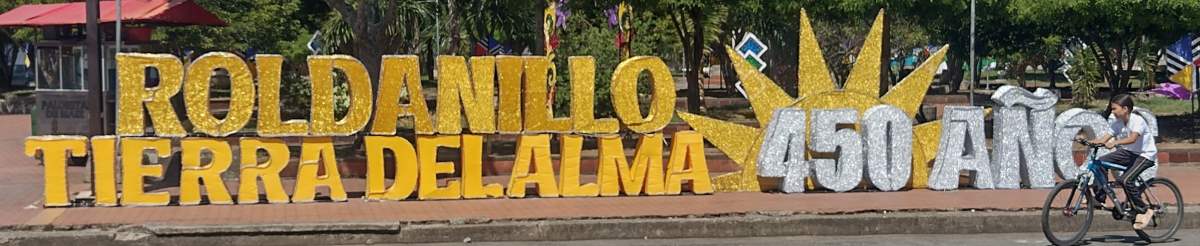
In 2026, Roldanillo turns 450 years old.
That alone earns it a pause, a chair in the shade, and maybe a second cup of coffee. Because towns don't reach 450 by accident. Roldanillo wasn't born as a tourist postcard, or an art destination, or a paragliding magnet. Like most enduring Latin American towns, it began as something far more modest and far more difficult: a survival experiment.
Before the map had edges
Long before a Spanish name was stamped on it, this valley was home to Indigenous communities who understood the land in ways GPS never will. They knew the rhythms of the hills, the rivers, the seasons that give and take without apology. Agriculture wasn't a business. It was a conversation with the soil. That understanding would prove quietly useful later.
A Spanish footprint, lightly pressed
Roldanillo dates to the mid-16th century, planted during Spain's push into what is now the Valle del Cauca. Unlike port cities or mining hubs, it wasn't built for spectacle or extraction. It existed because people needed a place to stop, farm, and live between larger ambitions.
That's important because towns founded for gold burn out, while towns founded for living endure.
Roldanillo grew slowly, shaped more by geography than ideology. No grand walls. No cathedral meant to dominate the skyline. Just homes, paths, and a relationship with the land that quietly persisted while empires came and went.
Weathering the centuries
Over four and a half centuries, Roldanillo has lived through the usual Colombian résumé:
- Colonial administration and neglect
- Independence and uncertainty
- Civil conflict, both loud and quiet
- Economic shifts that favored cities and forgot towns like this one
What you feel here instead is continuity. Streets that bend instead of grid. Conversations that start slowly and go long. A town that learned it didn't need to shout to matter.
Culture that arrived on its own feet
Roldanillo's modern identity wasn't imported wholesale. It arrived step by step. Artists found light here that didn't ask for permission. Farmers refined what the land already wanted to give. Flyers looked at the surrounding hills and thought, yes, that'll do nicely.
And slowly, almost accidentally, the town became:
- A reference point for art and creativity
- A center for paragliding and quiet adventure
- A place people come to breathe, not conquer
What 450 years really means
A 450-year anniversary isn't about age. It's about adaptability.
It means Roldanillo learned when to resist change and when to accept it.
It means it stayed small without becoming stuck.
It means it kept its edges soft.
Most towns disappear one way or another, swallowed by cities or emptied by time. Roldanillo chose a third option: remain useful, remain human.
Looking forward, not backward
This anniversary isn't just a history lesson. It's a reminder. Roldanillo has outlived trends, flags, and fortunes because it never tried to be something it wasn't. In a future obsessed with speed and scale, that might be its most radical achievement yet.
Four hundred and fifty years in, the message is simple:
Some places last because they grow fast.
Others last because they grow right.
Roldanillo always chose the second path.

I used to teach English as a foreign language in Barranquilla, Colombia. Now I'm retired and traveling throughout South America.
I'm from Kennewick, Washington, USA. In my previous life, as I call it, I was an IT guy, systems administrator, computer tech, as well as a shipping/receiving guy and also worked as a merchandising guy in a RV/Camping store.